Pets on High-Speed Rail: A Practical Guide — Cage Dimensions / Fares / Important Notes
Last time I took my pet on the High Speed Rail, we didn't realize until we reached the station that our carrier size was
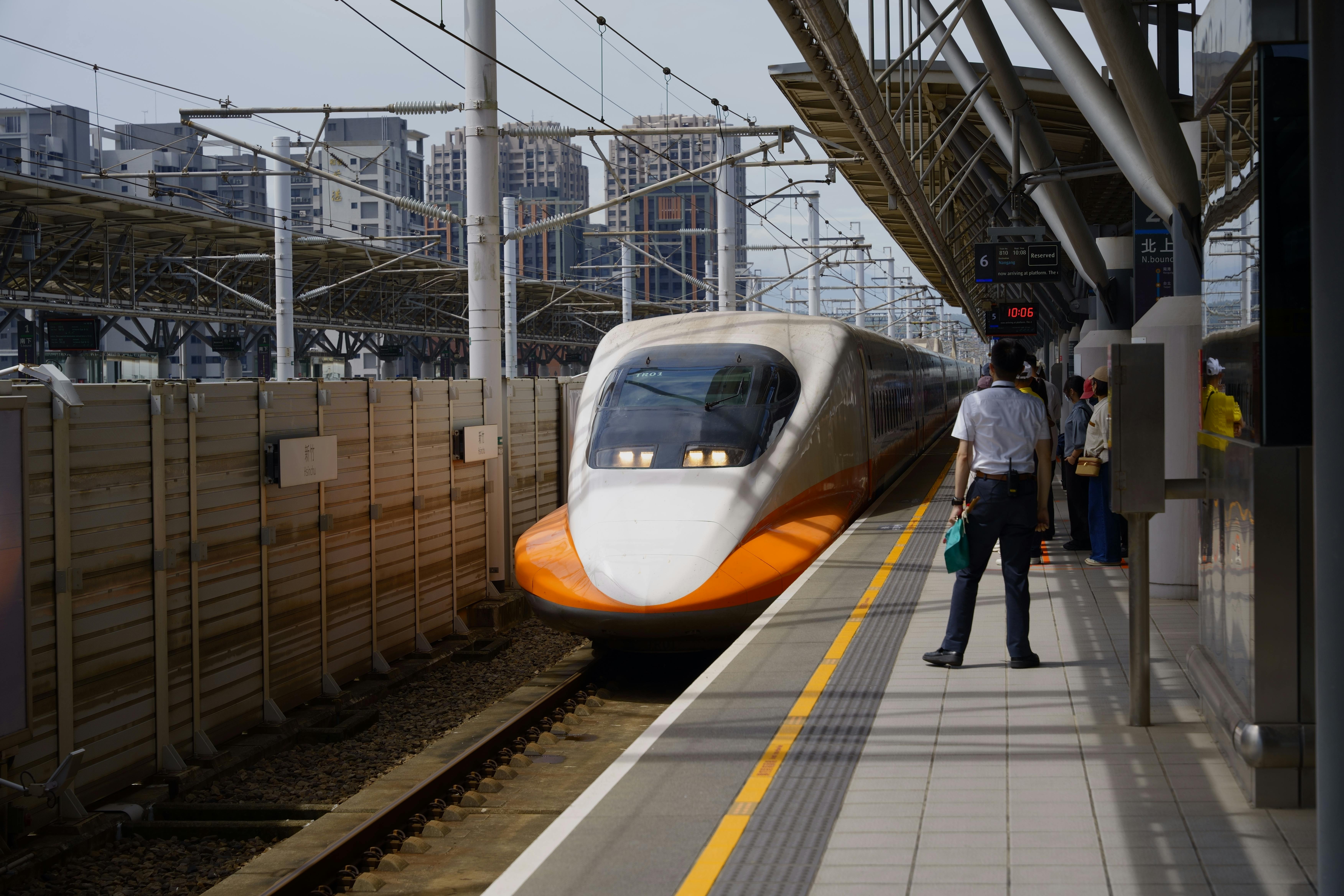
Taking Pets on HSR: A Practical Guide — Carrier Sizes / Fares / Things to Know 2026
Last time I took my pet on the High Speed Rail, we didn't realize until we reached the station that our carrier size was right at the borderline — the counter staff asked us to switch to a different train, and our entire afternoon was ruined. This time, I've compiled every regulation that's easy to trip over into one guide, so you can do all your homework before heading out.

Why Choose HSR for Traveling with Pets?
When it comes to long-distance travel with pets, your options are actually quite limited. Driving means traffic jams, car sickness, and gas station stops where pets can't get out. Flying is fast, but the quarantine procedures and carrier regulations are far stricter. Taiwan Railways (TRA) has pet-friendly carriages, but the schedule frequency and speed leave much to be desired. HSR sits right in the middle — fast, frequent, and with clearly published pet travel policies — making it a relatively pet-friendly option for owners.
Two Main Advantages of HSR
Fast and Frequent: Driving between Taipei and Kaohsiung normally takes 4 to 5 hours; HSR gets you there in about 1.5 hours. For pets prone to car sickness or separation anxiety, a shorter ride means less stress.
Clear Pet Policy: HSR is one of the few public transit systems that explicitly allows pets on board, with clear container regulations, ticketing rules, and boarding procedures. No more "finding out at the gate that pets aren't allowed" embarrassment.
Who Should Consider Taking Pets on HSR?
- Taking pets back to central or southern Taiwan to visit family, escape the cold, or escape the heat
- Taking pets across cities for medical care (especially referrals to Taipei)
- Taking pets to pet-friendly accommodations in other cities
- Pets that get carsick easily when driving
One thing to note: HSR's policy leans toward "pets stay in their carrier the entire time and never leave your hands." It's more of a transit tool than a sightseeing experience. If you want your pet to get out and stretch or needs lots of room to move around, this route may not be the best fit.
Trip Planning Recommendations
The whole process of taking a pet on HSR starts from the moment you book your ticket. The editor has broken the process down into five stages so you can prepare step by step.
Step 1: Before Booking — Check Your Pet and Carrier
HSR allows two main types of carriers (see the next section for detailed dimensions). Before booking, measure your pet's actual size plus the carrier weight.
How to measure: - Your pet's "body length" when standing (nose tip to base of tail) - "Height" (paw to top of head) - Plus the carrier's own thickness - These three numbers determine which ticket type you can book
Step 2: When Booking — Purchase a Pet Ticket
HSR hasn't integrated pet tickets into the regular booking system. Currently, you need to go through the following channels:
- HSR station ticket counters
- Designated service desks at certain stations
- Online or app booking is not supported
It's recommended to call ahead or check the official website 3 to 7 days before departure to confirm whether spots are still available for your desired time, as each train has a limited number of pet slots.
Step 3: On the Day of Departure — Arrive Early
Pet travelers need to check in at the staffed counter. Plan to arrive 30 to 40 minutes earlier than regular passengers:
- Queue to purchase or pick up tickets
- Carrier goes through security screening (X-ray or visual inspection)
- Confirm the carrier latches and bottom leak-proof pad
- Locate your designated carriage
Step 4: During the Ride — Keep the Carrier with You at All Times
Once on board, your pet must stay in the carrier the entire time. The carrier should be placed on the floor in front of your seat or on your lap — not on the seat, in the aisle, or on the luggage rack. If the carrier is large and needs to be placed in a designated area in the carriage, follow the conductor's instructions.
Step 5: After Arrival
A reminder announcement is made 5 minutes before arrival. Please organize your carrier first and exit in order when the doors open, avoiding blocking other passengers' path.

Practical Information at a Glance
This section compiles all the regulations you can look up in advance. But the editor wants to emphasize: HSR Corporation adjusts its regulations based on operational needs, so be sure to check the official website or call for the latest version before departure.
Pet Carrier Size Categories
HSR's current system roughly divides carriers into two tiers. The specific figures are based on the descriptions below; the editor recommends downloading the latest "Guidelines for Carrying Pets on Board" from the official website first:
| Carrier Tier | Use Case | General Rule |
|---|---|---|
| Small carrier (carry-on type) | Can be placed on your lap or on the floor in front of your seat | Upper limit on the sum of three sides; measure yourself to confirm |
| Large carrier (dedicated type) | Larger dogs or cats | Single-side length limit is more generous; must be placed in the designated carriage area |
How to determine: First measure your pet's "nose-to-tail-base" length when lying down, then add 10 to 15 cm of activity space. This usually indicates which carrier tier you need.
Carrier Requirements
Regardless of which tier you choose, the carrier itself must meet the following conditions:
- Sturdy: Able to withstand your pet's weight and impact
- Ventilated: At least two sides with ventilation holes
- Leak-proof: Bottom can absorb urine or has a waterproof pad
- Secure latch: Door latch can prevent your pet from pushing it open
- Hygienic: Pee pads or towels laid on the bottom
The editor reminds you that many "travel bags" on the market are cute but don't meet HSR regulations. Common reasons for being turned away:
- Soft cloth bags lack structural support
- Insufficient ventilation
- Zipper designs that pets can chew open
- No waterproof layer on the bottom
Ticketing Information
| Item | Details |
|---|---|
| Ticket type | A separate "pet ticket" must be purchased; not priced per person |
| Fee | Subject to HSR Corporation's announcement; please check the official website |
| Purchase method | Mainly at on-site counters; some service desks can handle it |
| Ticket limit | Each train has a limited number of pet spots; sold out means sold out |
| Ticket validity | Calculated separately from regular tickets; cannot be combined or accumulated |
Which Pets Are Allowed on Board?
- Common household pets such as dogs, cats, rabbits, and ferrets
- Guide dogs, hearing assistance dogs, and mobility assistance dogs ride free and are not subject to carrier restrictions
- Aggressive breeds and dogs regulated by certain local governments require prior confirmation
When Are Pets Not Allowed on Board?
- Aggressive or uncontrolled dogs
- Pets without a carrier or with a non-compliant carrier
- Pets without a purchased pet ticket
Station-Specific Notes
Taipei, Banqiao, Taoyuan, Hsinchu: Larger crowds; recommend arriving 40 minutes early.
Taichung, Chiayi, Tainan: Large stations have nursing rooms or private spaces where you can tend to your pet.
Zuoying: The terminal station in Kaohsiung. The layout is straightforward, but southern Taiwan's summer heat means you should pay extra attention to the temperature inside the carrier.
Station dining: Pets cannot eat on the ground in general seating areas. Some stations have outdoor or semi-outdoor areas for brief breaks.

Editor's Reminders / FAQ
Finally, here are answers to the most frequently asked questions.
Q1: Can small dogs ride without a carrier, just held in arms?
No. Unless they're working dogs like guide dogs, regular pets must stay in their carriers at all times. This is to protect the pet, other passengers, and driving safety.
Q2: Can pet tickets be booked online?
Currently, HSR pet tickets are still primarily handled at on-site counters. It's recommended to call ahead to reserve a spot, then go in person to pay and collect the ticket.
Q3: Can pet tickets be refunded or rescheduled?
Refund and rescheduling rules follow HSR's announcement. It's best to clarify with the counter staff when booking. In practice, if your pet suddenly gets sick or isn't doing well, keep medical documentation for follow-up.
Q4: Will cats get too stressed on HSR?
Cats are sensitive to environmental changes. The editor recommends:
- Let your cat get used to the carrier a week before departure (place it at home, put treats inside)
- Place a familiar blanket or a piece of the owner's clothing inside the carrier
- Prioritize shorter trips (the 1.5-hour Taipei–Kaohsiung run already counts as medium-to-long distance)
- Consult your vet about mild sedation if needed (do not medicate on your own)
Q5: Does the carrier have to be a crate? Are travel baskets acceptable?
As long as it meets the five requirements — size, sturdiness, ventilation, leak-proof, and secure latch — travel baskets and pet backpacks are all fine. But soft cloth bags and mesh bags with insufficient breathability are typically turned away.
Q6: What are the top three reasons for being turned away when taking pets on HSR?
- Carrier doesn't meet specifications (usually a medium dog with a small carrier)
- Carrier latch isn't secure (pet pushes the door open mid-ride)
- Pet ticket not purchased in advance, assuming it can be bundled with regular tickets
Q7: If I take my pet to another city, do I need to buy a separate ticket for the return trip?
Yes. A pet ticket must be purchased separately for each train ride. The same ticket cannot be used for a round trip.
Q8: Does HSR have a pet-friendly carriage?
There is currently no dedicated "pet carriage," but some trains will assign seats near the conductor's cabin for easier monitoring. You can note your preference when booking, but it's not guaranteed.
Q9: What's the most important preparation for taking a pet on HSR?
The editor recommends getting your pet used to the carrier well in advance. Many owners take their carrier on HSR for the first time, only to have their pet barking or throwing itself against the door the whole ride, resulting in being asked to disembark mid-trip. Letting your pet get familiar with the carrier at home and practicing staying in it for 1 to 2 hours is the most critical preparation.
Q10: What items should you bring with you?
- Pee pads (bring 1 to 2 extra)
- Water dispenser (clip-on type for outside the carrier)
- Your pet's favorite treats
- A worn piece of the owner's clothing (for familiar scent)
- Wet wipes and cleaning solution
- Pet health booklet and a copy of vaccination records
HSR's pet travel regulations are adjusted annually, especially numerical details like fares, carrier dimensions, and slot limits. This article provides a general framework and preparation logic. For specific figures and procedures, please refer to Taiwan High Speed Rail Corporation's official website or customer service hotline as the authoritative source, and be sure to double-check before departure.
